The Calgary Space Workers News
CSW #1
|
As we have had a great and successful Quarter Century Wireless Association (QCWA) Conference. It is time now to look at some of the ways that we can make our Moon Habitat better.
Most of the problems we had are correctable with some expense. We will also soon increase the capabilities of our habitat. A couple more photo voltaic solar panels to charge the deep cycle batteries and a couple more batteries as well. The AC power draw came to be more than what we could supply but an over kill system would have also had an unnecessary cost. The QCWA has agreed to allow us assistance in making the communication closer to the standards required to communicate with the International Space Station and Satellites. The QCWA will give our club members instruction to allow them the ability to challenge a radio license exam. Should our members decide to take this instruction at a later time it is offered at the Calgary Aerospace Museum for a nominal fee throughout the year. We need to continue to develop the heating panels made from Moon dust so that the system is linked properly to provide the storage of heat required to heat the habitat.
We will improve on our aeroponic system to show more growth of plant life in our simulated Moon dust. We will also develop a better lighting system, and process for developing oxygen and food production. We will improve and develop our Moon habitat to demonstrate a closer simulation of the needs to sustain life on the Moon.
| |
|
 |
| Jim building lighting shades to provide the simulation sunlight. This is to accellerate growth of plants for oxygen and food production |
|
|
|
Thank You To The QCWA
Thank you to the Quarter Century Wireless Association (QCWA) from the Calgary Space Workers Society (CSW) for their help and encouragement during the September Conference. Special thanks are also extended to the executives Ken Oelke and Jack Ambler for their encouragement and support. We had over seventy visitors from the conference and general public to view our simulated moon habitat. All but a couple were enthusiastic with the concept of using today’s technology to build a life supporting facility in space. We were enriched with the ideas and possibilities that were brought up in conversations with many individuals. Almost everyone who visited left their E-mail address to continue in the involvement of passing on ideas. The QCWA National Conference has been a landmark of opportunity in the future development of the CSW.
Sincerely Michael Bakk,CaptainCalgary Space Workers Society
|
| ------------------------------------------- |
Moon Society AffiliationBy Michael Bakk
The Calgary Space Workers Society is now an affiliation with the Moon Society (www.moonsociety.org) and will strive toward common goals. The president of the Moon Society, Peter Kokh and author of the Moon Miners Manifesto have offered several ideas to continue in our research station habitat in Drumheller, Alberta. Several ideas on our expansion to the inflatable corridor and modules have opened many avenues for future development. The Moon Society will be working with us toward our Moon habitation goals.
The Calgary Space Workers Society is now in need for a place to hold a presentation. The President of the Moon Society, Peter Kokh with his over twenty years of research into the colonization of the moon has offered to present on this subject. Other local speakers will also be able to present at the function. Mr. Kokh preferred to visit Canada prior to the end of this December if at all possible. Please contact me at captain@calgaryspaceworkers.com
|
Can we own land on the moon?
As we know we are not there yet so the closest we can get for now is to consider the growing demand of orbital slot allocations for today’s satellites and policies around them.
Satellites of today operate mostly on three orbital bands Low Earth Orbit (LEO), Medium Earth Orbit (MEO), Geostationary Earth Orbit (GEO). There are as of 2004, six hundred and twenty (620) operational satellites in one of these three orbits. The satellites make up of about two hundred and seventy (270) in LEO, up to fifty (50) in MEO and a little over three hundred (300) in GEO. Depending on the type of services needed most satellites will be set in a particular slot around the earth.
A satellites orbital slot determines the types of service it can provide. For remote sensing LEO is often used. The MEO is often the location used for critical navigation systems such as the GPS and the upcoming European Union Galileo system. Most communications and weather satellites are positioned into a GEO slot over the earth. The GEO is different than others in that the orbital movement of the satellites at this altitude is in synch with the earth’s 24hour rotation. This causes the satellite to appear to remain in a stationary location over a single area of the earth. This eliminates the need to buy vary expensive tracking receivers.
The International Telecommunications Union (ITU) convention states that satellites radio efficiency and economical operation must be maintained so that countries or groups of countries may have equitable access to both. In this case we are speaking of the GEO orbital slots that are allocated by the ITU. The language used is interpreted as meaning that such a position should be made available on a first-come first-serve basis. In order so that the frequency interference does not occur GEO satellites are required to maintain at least 2 degrees of orbital separation, depending on the band used for transmitting, receiving and the "field of view" of their ground antennas. This leaves room for a maximum of 180 satellites that could be in the prime equator orbital path. In the most desired equatorial slots across the USA there is room for only 38 satellites.
Over the years the increase demands for the most desired orbital slots have caused space actors to file requests for orbital slots prematurely and/or in great quantity. This caused a backlog at the ITU and delays for legitimate requests. In 1992, a conflict occurred when a company called Pasifik Satellite Nuantana (PSN) of Indonesia launched a satellite and placed it in a vacant GEO slot that was registered to a company called Tonga through the ITU. Indonesia and PSN refused to abide by the ITU ruling. The dispute escalated in July of 1993 when a U.S. firm leased the slot from Tonga and orbited a satellite into position but too close for comfort for PSN. In 1996 Tonga leased the same slot to a Chinese company which prompted PSN to jam the satellite. Ultimately PSN abandon their satellite. Perhaps the most disturbing however, is that the ITU could not stop Indonesia’s or PSN’s actions.
Compounding the problem that the ITU was having with the ability to stop PSN was that space actors registered slots but were not paying up as agreed. In year 2000 the ITU predicted a short fall of 16 million for the year 2004 and this would continue annually through to 2007. The ITU has tried to collect money owed for slots registered but then finally accepted help from Ad Hoc Group- Cost Recovery for Satellite Network Filings. The Ad Hoc Group has formed the methodology behind the charge for filing and made recommendations to the ITU.
The increased use of space inevitably leads to an increased demand for the portions that are available and progress in the ability to have colonies on the moon will be no exception. Efforts to undermine the ITU’s legitimacy could be a cause for concern in the future and progress will be needed toward the use of the Moon as well. It is however, a thought for future explorers who want to live in space and on the moon. What methodology can we use for filings and what charge can we make? How can we enforce a lease for the space or land? How can we collect?
Although we can see the difficulties in such a task one must realize that it has already started with the ITU. One must also realize that it can be done.
Information source: Space Security 2004 by Mr. Simon Collard-Wexler, Ms. Jessy Cowan-Sharp, Ms. Sarah Estabrooks, Amb. Thomas Graham Jr., Dr. Robert Lawson and Dr. Willium Marshall
|
Headquarters to Inflatable Habitats
What do you think we should build first? The corridor is a definite necessity so we can leave the headquarters and even run electrical conduit and pipe to supply the needs of the extended modules, but what then? The plan is to build our shop first so as to have the additives, resins and equipment to mix with the Moons soil and build the rest of the habitat. The plan is to have this module as a hard shell as well. It seems to us that in order to bootstrap our way along there will be a need to have a couple things to ensure a strong start. The plan is to use a cargo trailer that is much like ones you see used to carry racecars to the races. This trailer will have the ability to have some additional rooms if necessary and an assortment of tools/materials etc. for the use of building and repairing the rest of the habitat. A simulated air-lock can also provide the ability to repair a rover inside the shop and act as a door large enough to remove some prefab module sections. Next will be the wetlands biosphere project. This will likely be a dome building out of a similar material as the corridor and be the first inflatable module other than the corridor. The last planned at this time would be a dorm module and then maybe a lab or common area. It is important that other designs be experimented with and we are encouraging the members to build their own living quarters of their own design. We will however, join as a collective group for manufacturing. The plan is also to consider underground modules to extend the radiation shielding, thermo protection and thermo flux of a habitat exposed to direct sun, small meteors, solar winds etc.
|
Our Future Plans For Public Awareness and Satellite Communication
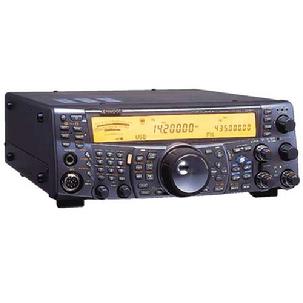
The headquarters contains life support to live is space but also contains most of the equipment that is needed for communication with the International Space Station (ISS) and other satellites.
As we continue to move forward and get the last couple components we at the Calgary Space Workers Society (CSW) will have members trained through the Quarter Century Wireless Association (QCWA) and licensed to operate ham radio equipment. The QCWA has volunteered to assist our interested members in challenging the Ham Radio License. This license is needed for communication with the ISS. Also, when anyone is applying for permission to communicate with ISS, the equipment specification that is to be used is required information. This is to make sure you are properly prepared. The high cost of this equipment is another reason for placing the specs on the form, as it is not common equipment for all enthusiasts of ham radio operation. We look forward to the opportunities ahead for encouraging more involvement in space and communication.
The CSW is putting this equipment and expertise together to encourage high schools and other educational facilities to apply to speak to the ISS. Last time this was done by Brian Jackson of Alberta and his team there was five hundred and seventy (570) students listening over the shoulders of the few students who were chosen to initiate the questions on behalf of their educational facility. This set up for the students also took a significant amount of time and effort. A mobile satellite communication centre would be an ideal solution to replace the hours of preparation required. The CSW will thus be able to bring its mobile satellite communication centre to any location in Canada or the United States to supplement the education of students who apply for this opportunity.
We at the CSW are committed to this project and will enjoy showing off the other aspects of our Lunar habitat demonstrator and encourage further study of space travel
|
What is a living wallBy JimOldfield
|
 |
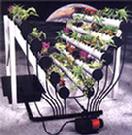
| photo credit Furbish Company |
|
|
A living wall is a vertical garden. Plants are rooted in compartments between two sheets of fibrous material anchored to a wall. Water trickles down between the sheets and feeds moss, vines and other plants. Bacteria on the roots of the plants metabolize air impurities such as volatile organic compounds.
Second-order walls contain only plants and some insects, while third-order walls house fish and salamanders in a pool at the bottom of the wall, where the trickling water is captured before being filtered and recirculated to the top again.
'Active walls' are joined to a building's air circulation system. Fans blow air through the wall and then recirculate the air throughout the building. Some active walls are kept behind glass to create more predictable airflow effects.
'Inactive walls' have no mechanized air circulation. Instead, they are kept open to promote as much free air circulation as possible.
The living wall is a form of urban agriculture or urban gardening. It may be built as a work of art for its beauty. It is sometimes built indoors to help cure sick building syndrome or otherwise increase the oxygen levels in recirculated air from too high levels on carbon dioxide, formaldehyde and other toxins.
It is also a means for water reuse, at least as utility water. The plants may purify slightly polluted water (such as grey water) by digesting the dissolved nutrients. Bacteria mineralise the organic components to make them available to the plants.
Source: Wikipedia
|
Next Meeting November 4, 2006 at 9:00 am until Noon. Location: Tower Aerospace Inc. at 105, 1530-27th Avenue N.E.Websites that we will discuss at next meetingMoon Miners Manifesto"M" IS FOR "MOLE"Yes, lunar habitats and facilities will be covered by some 2-4 meters (6-13 feet) of lunar soil or "regolith."http://www.lunar-reclamation.org/mmm_1.htmAn underground facility built Photohttp://www.lunar-reclamation.org/terraluxe.JPGMoon Miners Manifesto free sample issueshttp://www.lunar-reclamation.org/mmm_samples/index.htmWebsites that we will discussed in past meetingsMoonROx Challenge to advance the state-of-the-art in oxygen production from lunar regolithhttp://www.fsri.org/space_research_Moon_ROx.htmFrom the World Energy Council LUNAR SOLAR POWER SYSTEM FOR ENERGY PROSPERITY WITHIN THE 21ST CENTURYhttp://www.worldenergy.org/wec-geis/publications/default/tech_papers/17th_congress/4_1_33.aspNew-generation lunar projects, including rover to extract breathable oxygen from moon dust.http://www.dispatch.com/science/science.php?story=dispatch/2006/02/21/20060221-D4-01.html Biosphere 2 in Southern Arizona was an experiment that didn’t pan out but was used as a potential Mars simulation habitat the people lived in for two years before the problems started.http://www.bio2.com/index.htmhttp://www.biospheres.com/experimentchrono1.htmlFrom NASA Lunar Regolith Simulant Materials (moon dust and rock)Workshop Book of abstracts (50 pages) and a final report from January, 2005http://est.msfc.nasa.gov/workshops/lrsm2005.htmlHow does a heat pump work?http://home.howstuffworks.com/question49.htmHow Solar Cells Workhttp://science.howstuffworks.com/solar-cell.htmSilicon in Solar Cellshttp://science.howstuffworks.com/solar-cell3.htmHow many solar cells would I need in order to provide all of the electricity that my house needs?http://science.howstuffworks.com/question418.htmBoeing's RoleAs the prime contractor to design, development, construction and integration of the ISShttp://www.boeing.com/defense-space/space/spacestation/DYSON'S ANIMATED MOON MAPFly the lunar lander using your cursor. A click brings up a text box with datahttp://www.mariannedyson.com/moon.htmHosts For Quarter Century Wireless Association National Convention 2006(September 28 - 30, 2006)http://www.obsd.com/qcwa-chapter151How Satellites Workhttp://electronics.howstuffworks.com/satellite.htmHow the Radio Spectrum Workshttp://electronics.howstuffworks.com/radio-spectrum1.htm-----------------------------------------Wetlands Biosphere Project-------------Plant Life Support Experimentation Suggestionshttp://www.asi.org/adb/04/03/05/experiment-suggestions.htmlPlants and Food for a Permanent Moonbasehttp://www.asi.org/adb/04/03/05/food.html------------------------------------Another Tourist goes to space-----------------American technology entrepreneur Greg Olsen launched to the International Space Station (ISS)www.spaceadventures.com/orbitGreg Olsen, Ph.D. landed after a 10-day mission to the International Space Station (ISS).http://www.spaceadventures.com/media/releases/2005-10/289-----------------------------------Space Habitats--------------------------Genesis I spacecraft currently in orbitBigelow Aerospace Genesis-1 has taken the deflated NASA idea and puffed new life into the use of what Bigelow Aerospace refers to as an ‘expandable’ space-basehttp://www.bigelowaerospace.com/multiverse/news.phpGenesis-1: Reaching Escape Velocity From Red TapeThe general concept for "inflatable" space habitats was initially developed by NASA for use in a proposed mission to Marshttp://www.space.com/businesstechnology/o60726_itar_genesis-1.htmlISS Habitation ModuleScroll down to the trans-hab module, for extra crew quarters. How Stuff Works.http://science.howstuffworks.com/space-station12.htmHow Space Stations Work Generallyhttp://science.howstuffworks.com/space-station4.htmINTERNATIONAL SPACE STATION INFORMATION PAGEhttp://www.ag-99.de/spacenet/main/main.htmlDicovery Channel INTERNATIONAL SPACE STATION ISS websitehttp://school.discovery.com/schooladventures/spacestation/HowStuffWorksHow Inflatable Spacecraft Will Workhttp://science.howstuffworks.com/inflatable-spacecraft2.htmSpace Vehicles DirectorateWith an eye to the future, the Space Vehicles Directorate has played a significant role in the genesis of new space architectures in the past, and continues to expand its role in the development of technology to redefine mankind's usage of space.http://www.vs.afrl.af.mil/productlines/spacecraftcomponent.aspxStudy on Inflatable Lunar HabitatsWilliam Mook has prepared a number of studies on space development, some of which relate directly to the Artemis Project's goals.This concept of an inflatable habitat could be a possibility for expanding the pressurized space of Moonbase Artemis for increased crew, or for lunar tourism. He has posted the following brief summary of his study:http://www.asi.org/adb/02/06/inflatables-study-1.htmlOrbital Space Habitats, sited at Lagrange points and capable of holdings thousands of people, can be built cheaply and effectively only with lunar resources.http://www.asi.org/adb/02/06/index.htmlA great example of a space station will be an undersea hotelhttp://www.poseidonresorts.com/Space Race 2: Inflatables Take Shapehttp://www.spacedaily.com/news/xprize-04zt.htmlProgress Made on Inflatable Private Space Modulehttp://www.space.com/missionlaunches/050308_bigelow_update.html--------------------------------------------Power Plants For Space---------------------How Stuff Works. Life SupportAtmosphere Control, Supply and RecyclingAstronauts on board the ISS need to have the following:* Atmosphere similar to Earth's* Carbon dioxide that they exhale removed* Contaminating or trace gases removed* Normal humid environmenthttp://science.howstuffworks.com/space-station4.htmThe Gas Turbine – Modular Helium Reactor: A Promising Option for Near Term Deployment( PDF )http://gt-mhr.ga.com/images/ANS.pdfTHE SIMPLICITY OF THE GAS TURBINE AND THE HELIUM REACTOR PROVIDE THE NEXT GREAT STEP IN NUCLEAR POWERhttp://gt-mhr.ga.com/1simpl.htmlPebble bed reactor using heliumhttp://en.wikipedia.org/wiki/Pebble_bed_reactorMoon gas could meet earth's future energy demandshttp://www.spacedaily.com/2004/041126084122.6pp9f0wx.htmlProbable Discovery Of A New, Supersolid, Phase Of Matterhttp://www.spacedaily.com/news/materials-04zzi.html---------------------------------------Green houses in space-----------------HMP Research Station Arthur Clarke Mars Greenhouse Photo Report - July 23, 2005http://www.marsonearth.org/multimedia/07.23.05.hmp.rs.photo.report.htmlWhen humans go to the moon or Mars, they'll probably take plants with them. http://science.nasa.gov/headlines/y2004/25feb_greenhouses.htm-----------------------------------------Communications in Space----------------------------International Space Station Reference Ham Radio http://spaceflight.nasa.gov/station/reference/radio/ How to Pick the Right Antennahttp://www.odessaoffice.com/wireless/antenna/how_to_pick_the_right_antenna.htmMake 2.4GHz parabolic mesh dishes from cheap but sturdy USB WiFi adaptor http://www.usbwifi.orcon.net.nz/What does Moonbounce sound likeSelect a Soundfile from the List and click on the 'Play' Link to listen By Morse-code and by voicehttp://www.hb9bbd.ch/soundfile.php3How Space Stations Work Communications and Trackinghttp://science.howstuffworks.com/space-station6.htmCalgary Amateur Radio Association---On Earth Moon Earth ham radio communicationhttp://www.cara.ampr.org/How Ham Radio Workshttp://electronics.howstuffworks.com/ham-radio3.htm------------------------------------------Building Materials-----------------------------WHAT IS A COMPOSITE http://www.compositesatlantic.com/what_comp/vol1_2/vol1_2.html"designer material"derived from plastic could help protect astronauts on their way to Mars http://science.nasa.gov/headlines/y2005/25aug_plasticspaceships.htmPlastic Spaceships By NASAScience news from NASA Aug 25/05 on Plastic SpaceshipsSpace Radiation Shieldinghttp://radiationshielding.nasa.gov-------------------------------------------Breathing in Space---------------------------Clearing the Air: Smaller Detectors Needed for Moon, Mars Missionshttp://www.space.com/businesstechnology/technology/050608_airmonitor_techwed.htmlSpace Station Crew to Ignite First Oxygen-Generating Candleshttp://www.space.com/missionlaunches/050520_exp11_oxygen.html------------------------------------------Water in Space-------------------------------www.MoonDaily.comFinding Water Critical To Life On Moonhttp://www.spacedaily.com/news/lunar-04zzo.html How to Pick the Right Antennahttp://www.odessaoffice.com/wireless/antenna/how_to_pick_the_right_antenna.htmMake 2.4GHz parabolic mesh dishes from cheap but sturdy USB WiFi adaptor http://www.usbwifi.orcon.net.nz/What does Moonbounce sound likeSelect a Soundfile from the List and click on the 'Play' Link to listen By Morse-code and by voicehttp://www.hb9bbd.ch/soundfile.php3How Space Stations Work Communications and Trackinghttp://science.howstuffworks.com/space-station6.htmCalgary Amateur Radio Association---On Earth Moon Earth ham radio communicationhttp://www.cara.ampr.org/How Ham Radio Workshttp://electronics.howstuffworks.com/ham-radio3.htm------------------------------------------Building Materials-----------------------------WHAT IS A COMPOSITE http://www.compositesatlantic.com/what_comp/vol1_2/vol1_2.html"designer material"derived from plastic could help protect astronauts on their way to Mars http://science.nasa.gov/headlines/y2005/25aug_plasticspaceships.htmPlastic Spaceships By NASAScience news from NASA Aug 25/05 on Plastic SpaceshipsSpace Radiation Shieldinghttp://radiationshielding.nasa.gov-------------------------------------------Breathing in Space---------------------------Clearing the Air: Smaller Detectors Needed for Moon, Mars Missionshttp://www.space.com/businesstechnology/technology/050608_airmonitor_techwed.htmlSpace Station Crew to Ignite First Oxygen-Generating Candleshttp://www.space.com/missionlaunches/050520_exp11_oxygen.html------------------------------------------Water in Space-------------------------------www.MoonDaily.comFinding Water Critical To Life On Moonhttp://www.spacedaily.com/news/lunar-04zzo.html
|
Contact Us By Mail
Calgary Space Workers Society
7420 Farrell Rd. S.E.
Calgary, Alberta, Canada, Planet Earth T2H-0T6
Phone (403) 259-6809
www.calgaryspaceworkers.com
E-mail: captain@calgaryspaceworkers.com
To unsubscribe: captain@calgaryspaceworkers.com
Please put unsubscribe in the subject line
|
|